 (2009)
Oshogatsu—
My first impression of Japanese new year was of how very, very quiet it was.
Until more recent times, the Japanese calendar was based on the Chinese solar-lunar calendar, so oshogatsu fell closer to the spring equinox—like the Chinese New Year of today. Therefore, it was both a celebration of the new year, but also a welcoming back of spring (and new life).
In spite of its obvious celebratory mood, for me it will always be the Quiet Holiday. And that is saying a lot in a country that is pretty quiet anyway– well at least compared to Hong Kong!
Lasting several days, it is as if the entire country has been blanketed in a heavy snowfall.
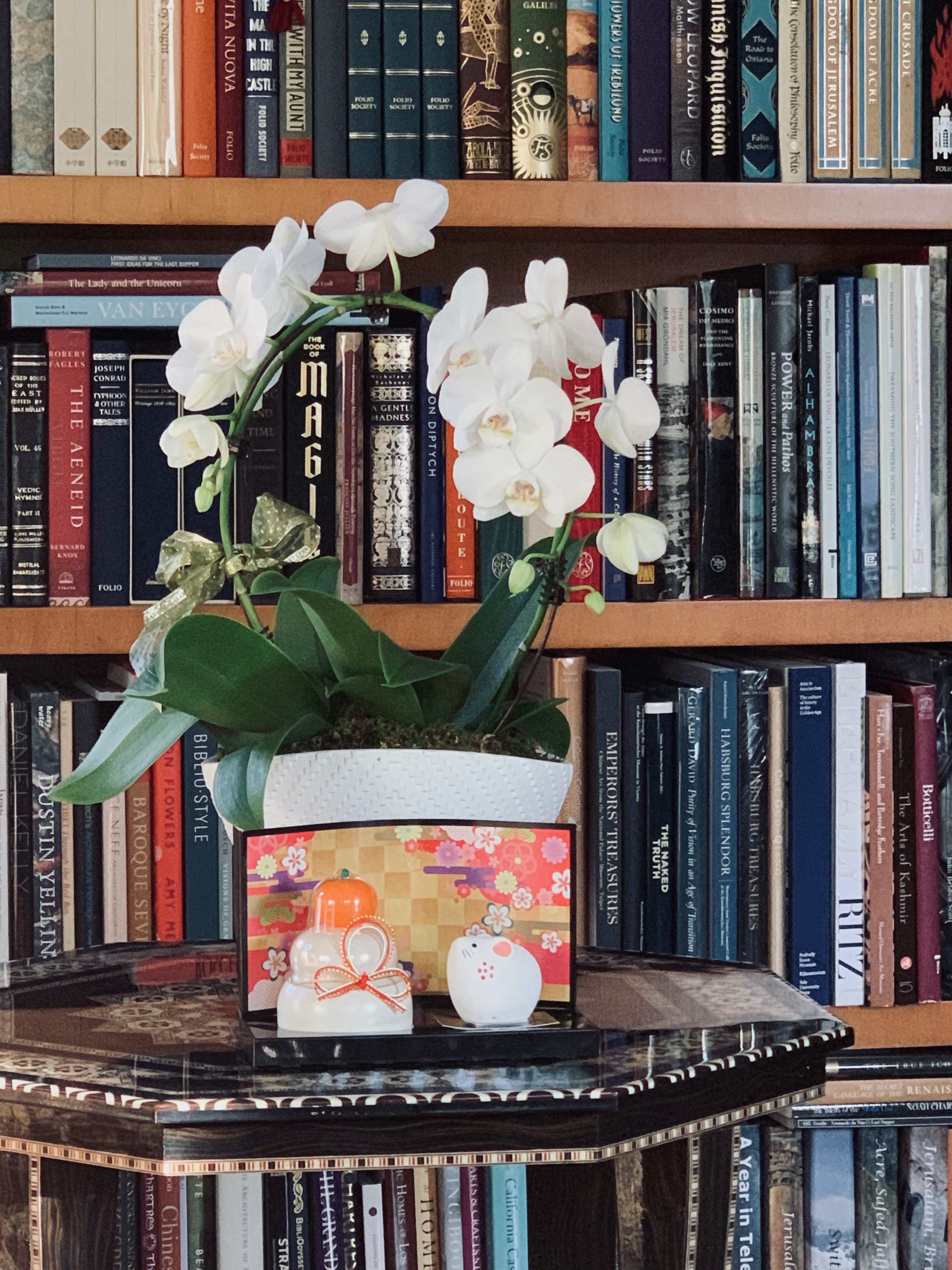 **
**
The First Day of the First Month– in addition to its names referring to the coming of Spring– 新春、猛春、開春—the old calendar term for January was “mutsuki” 睦月. Mutsu means “intimate, harmonious or friendly,” so mutsuki signifies that this was month “when people come together.” It’s true, for even today, oshogatsu above all is a time for families to re-connect, as all over Japan, people return in great waves—emptying out of the cities—to return to their hometowns.
When I lived in Tokyo, I always thought the city felt almost like a ghost town during the New Year holiday–even Tokyo Station emptied out.
In Japan, it is also a time of reflection and contemplation, and I think it was this aspect of the holiday that drew me in so deeply when I first arrived in Japan. Of course, in America, we make our New Year’s Resolutions, but that is perhaps the extent of the contemplative aspect of the holiday. For most Americans, I think New Year is a great party. A celebration of what will probably be another great year.
In Japan, perhaps more in common with Easter, the coming of spring is of course a reference to new life and the ability to renew; to be re-born. And, the holiday is marked by its reference to “the firsts”—
The first dream 初夢
The first glance in the mirror 初鏡
The first visit to the Shrine 初詣
The first bath 初湯
The first smile 初笑
Along with spring, the self is also reborn and one should experience all the blessings in life as if they were happening for the first time. Contemplation underpins this holiday in a way I wouldn’t have been able to imagine had I not gone and lived there. And I love that. You look at your image in the mirror all the time. The First Glance in the Mirror, however, urges you to step back, empty your mind and really look. 改めてみること。Look again; look deeper, and look with a clear heart explains my favorite book of Japanese seasons.
Mirrors have long played a religious role in Japan. Like many cultures, the Japanese thought they had the power to show a person’s soul. Symbolizing wisdom, one of the Three Sacred Treasures (三種の神器) of the Japanese Imperial family from the beginning of time in Japan has been a mirror. Mirrors are also a symbol of Japanese New Year in the form of glimmering white and transparent mochi. The most popular New Year’s decoration, kagami mochi 鏡餅、is just as the name implies in Japanese, “mirror rice cakes.” Long ago, they were solely offerings traditionally made at shrines and temples. White rice cakes like mirrors to reflect the image of god as well as the soul of the person making the offering.
 Oshogatsu requires a lot of preparation. Not just cooking but traditionally women spent a lot of time cleaning their homes to start the year pristine as possible….
In addition to the cleaning, there are the foods to arrange and other decorations. One aspect of the holiday that was hard for me to become accustomed to was the stress on endings. Not only do things need to be prepared on time, but even more—things need to be finished on time.
A few years ago, Yoshimi called me on the telephone. “Is Osawa-san alright? Her New Years decorations are still out so I have become very worried about her.”
The proper day you should put away your decorations depends on where in Japan you live, but in many places it’s the first full moon of the month, known as Small Oshogatsu. That is usually the official day for bringing your decorations to the shrine to be burned. It was always a challenge for me to get the endings right. No matter how much I enjoy the preparations and the holiday itself, I tended to forget that there was a specific day in our town that the decorations are meant to be taken down. But now, when I look back, I think these calendrical events give form to life in a very significant way– they call us to look beyond the everyday busy-ness and need to control things, and to just let go to “how things are done” according to the calendar.
I hope you all enjoy your new year wherever you are!
 ++
++
Philip Larkin~~~
FIRST SIGHT
Lambs that learn to walk in snow
When their bleating clouds the air
Meet a vast unwelcome, know
Nothing but a sunless glare.
Newly stumbling to and fro
All they find, outside the fold,
Is a wretched width of cold.
As they wait beside the ewe,
Her fleeces wetly caked, there lies
Hidden round them, waiting too,
Earth’s immeasurable surprise.
They could not grasp it if they knew,
What so soon will wake and grow
Utterly unlike the snow.
Oshogatsu

 Dewdrop World